
Why you audit before you post anything
You just won an account. The temptation is to open the composer and start publishing to show momentum. Skip the audit and you inherit every problem the last manager left behind: an off-brand bio, three dead platforms, a posting cadence that trained the audience to ignore the brand. You will spend month two undoing month one.
A social media audit for a new client is a structured read of where the account stands today. It answers three questions before you commit to a strategy: what is actually working, what is quietly hurting the brand, and where the fastest wins are. Do it once, up front, and every decision after that has evidence behind it instead of a guess.
What a social media audit actually covers
An audit is not a follower count screenshot. It is a fixed set of checks you run the same way on every account so nothing slips. Cover five areas: profile and branding, content performance, audience, competitors, and platform mix. Skip any one of them and you leave a blind spot that surfaces later as a client complaint.
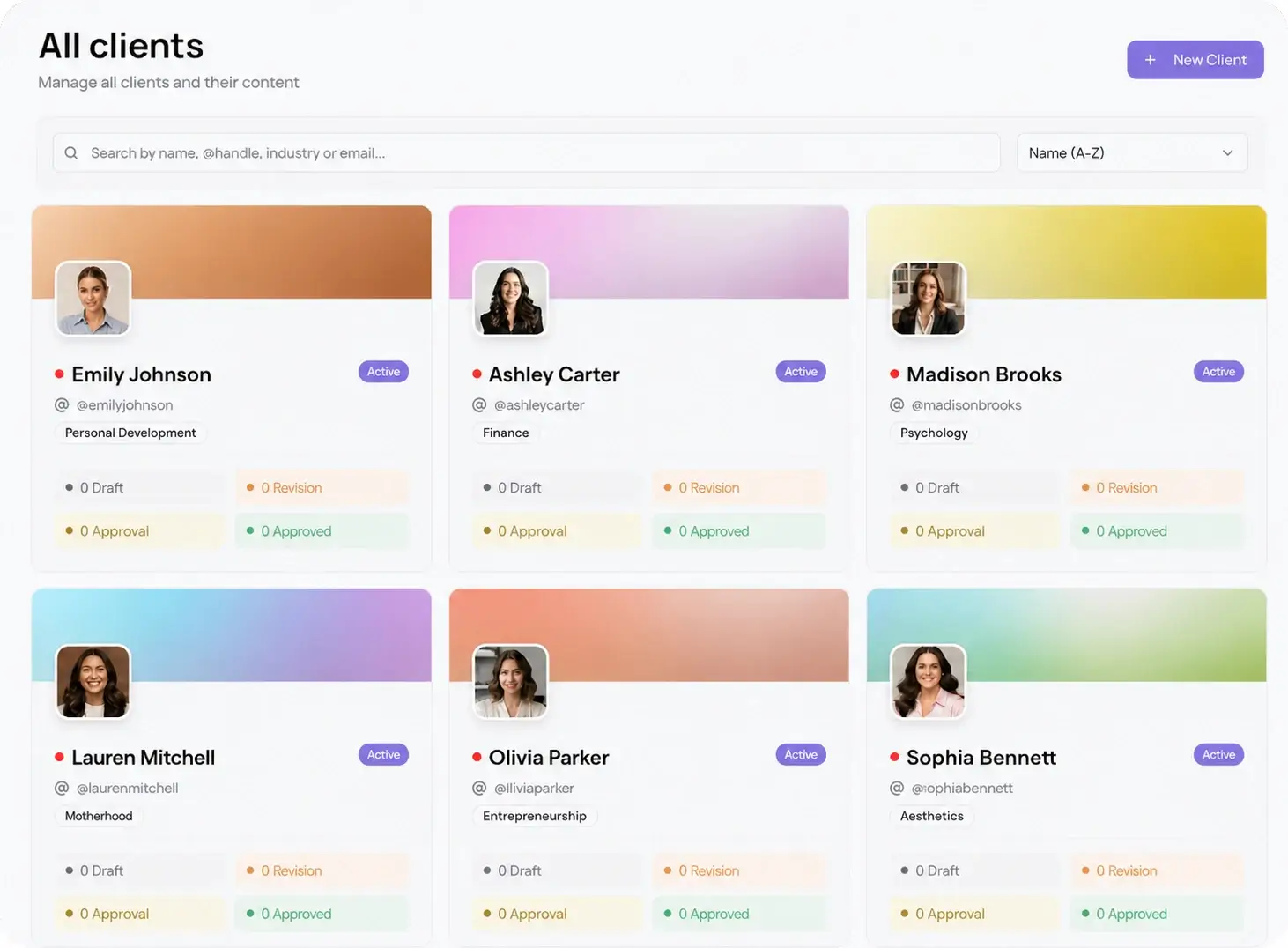
Keep the scope tight. You are not rebuilding the brand, you are reading it. Two to four hours is enough for one client across three or four platforms if you have a checklist. Store what you find in one place from the start so the audit becomes the first page of the account's playbook, not a document that gets lost after the pitch.
Audit the profiles and branding first
Start with the parts a prospect sees in the first three seconds. Open every profile the client runs and check the handle, display name, profile photo, bio, link, and pinned content against each other. Inconsistency here reads as neglect, and it is the cheapest thing to fix.
Confirm the handle is the same everywhere it can be, the bio says what the brand does and who it serves, and the link points somewhere current. Note any platform that has a logged-in presence but no posts in months. A dormant account with an old promotion pinned to the top does more damage than no account at all, and flagging it early sets up an easy first win with the client.
Read the content and pull the analytics
Now go into the numbers. Open the native analytics on each platform and pull the last 90 days: reach, engagement rate, follower change, and which posts performed best and worst. Follower count is the vanity metric everyone quotes and the one that matters least. Reach and engagement tell you whether the content is landing.
Look for patterns, not single posts. Which format drove the most reach, video, carousel, or single image? Which topics got saved and shared? How often did the account post, and did engagement track with consistency? Write the answers down as findings, each tied to a goal. Once you take the account over, connecting it to social media analytics in one dashboard means the next audit and every monthly report pull from the same numbers instead of ten separate tabs.
How to do a social media audit for a new client in 8 steps
Run every new account through this exact order and the audit stops being a blank page.
- List every platform the client has a presence on, active or dormant, so nothing hides.
- Check profiles side by side: handle, name, photo, bio, link, and pinned post for consistency.
- Pull the last 90 days of native analytics on each platform: reach, engagement, follower change.
- Read the top five and bottom five posts to spot which formats and topics drive results.
- Map the real audience from the analytics, age, location, and active hours, against who the client thinks they reach.
- Scan two or three competitors for cadence, formats, and gaps you can own, using content discovery to find what is working in the niche.
- Decide the platform mix: where to double down, where to pull back, where to start fresh.
- Turn every finding into a dated action and drop it onto the first month's content calendar.
The last step is the one agencies skip. An audit that ends in a PDF nobody opens is wasted work. An audit that ends as scheduled posts is a strategy.
Turn findings into the first month of posts
The audit's job is to make the first thirty days obvious. Each finding maps to an action. The bio is off-brand, so rewrite it in week one. Video outperforms static three to one, so the content plan leans video. The audience is most active at 7pm local, so that becomes the default posting window.
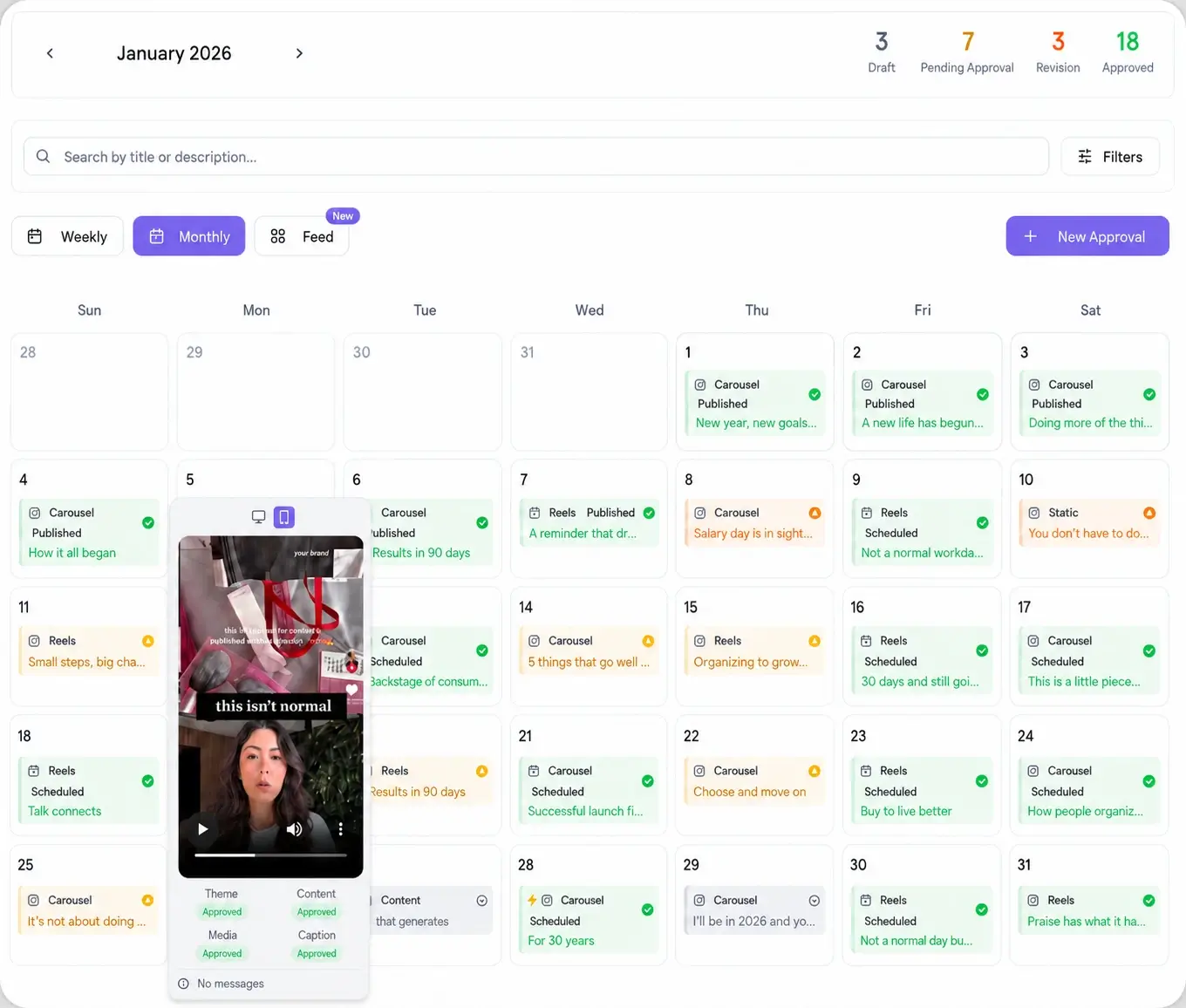
Batch that first month into a calendar the client can see in full, then send it for sign-off before anything publishes. When the plan is visibly built on their own numbers, approval gets faster and the client trusts the direction. You can keep captions on-brand from the first post with AI content formatting, so the voice is consistent while you are still learning it.
Make the audit repeatable across the roster
The value of an audit compounds when it is the same every time. When the checklist lives in your head, the audit for client twelve is thinner than the one for client one, and a busy week means it gets half done. When it lives in a documented process backed by per-workspace tooling, a new hire can audit an account without you in the room.
Viraly Post runs it from one dashboard: a separate workspace per client, all 10 native integrations feeding analytics into one view, and a shared calendar the client approves. Priced per workspace from $29 to $99 a month, the audit you run before the pitch becomes the reporting baseline you use for the life of the account.