
The quiet reason good accounts churn
A client rarely fires an agency because the work is bad. They fire it because they stopped seeing what they were paying for. The posts went out, the engagement looked fine, and then a tighter budget quarter arrived and social was the line item nobody could defend in a dollar figure. That is the gap that proving ROI closes.
Reporting activity is not proving ROI. A slide that says you published 42 posts and reached 180,000 accounts tells the client you were busy. It does not tell them the money came back. ROI is a return relative to cost, so the case you have to make is simple on paper and skipped in practice: here is what social gave you, here is what you paid, here is the gap. Most agencies never close that loop, and the ones that do rarely lose the account on price.
What social media ROI actually means to a client
Social media ROI is the value social generated measured against what the client spent to get it, their retainer plus any ad budget. The formula clients understand is return minus cost, divided by cost. If social drove $12,000 in tracked leads and sales and the client paid you $3,000, that is a 300 percent return, and you say it in those words.
The trap is thinking ROI only means direct sales. For most accounts it does not. A brand running awareness measures ROI as the reach it would have paid for with ads. A B2B account measures it in qualified leads. A busy founder who handed you the whole channel measures it partly in the hours they got back. Each of those has a dollar value, and your job is to name the right one for each client before you ever pull a number.
How to prove social media ROI to agency clients, step by one step
Start every account by agreeing what a win is worth. In the kickoff, ask one question: what does a lead, a sale, or a new follower actually mean to this business? A dental practice might value a new patient at $800. An online store knows its average order. Once you have that figure, every result you report converts into money instead of staying a social number the client has to translate on their own.
From there, you attribute. Use tracked links, UTM tags, and a promo code or landing page per campaign so the result traces back to the post that caused it. You will not capture every assisted conversion, and you should say so, but a defensible estimate beats a wall of reach stats. Pull the engagement and click data alongside the outcome in your social media analytics so the full path from post to result sits in one view instead of three browser tabs.
Put a dollar value on outcomes that are not sales
The accounts where agencies struggle to prove ROI are the awareness and community ones, and they are also where a little framing goes furthest. Reach has a price: the impressions you delivered organically would have cost a knowable amount as paid ads, and that saved spend is real money you can show. Engagement and a growing community feed retention and word of mouth, which lower the client's cost of winning the next customer.
Saved time is the most undersold of all. If social used to eat ten hours a week of the client's own team, and you took that off their plate, that is a salary line they are no longer spending. Price it at their blended hourly rate and it often rivals the retainer on its own. None of this is invented value. It is value the client already feels but has never seen written down next to your invoice.
How to build a social media ROI report in 6 steps
Run every account through this loop and the monthly report stops being a scramble and starts being the reason the client renews.
- In the kickoff, agree what one lead, sale, or new follower is worth to this specific client, and write the number down.
- Pick the two or three outcomes that map to the client's goal, whether that is revenue, leads, reach, or saved time.
- Set up tracked links, UTM tags, and a per-campaign code or landing page so each outcome traces back to a post.
- Each month, convert the results into dollars using the values from step one, then set that total against what the client paid.
- Add one plain sentence to each number explaining what it means for the business and what you will do next because of it.
- Send the report on the same fixed date every month, even a quiet one, so the value stays visible between invoices.
Six steps, no clever math. The discipline is agreeing the dollar values up front so you are never guessing what a result is worth the night before a client call.

Make ROI proof part of how the agency runs
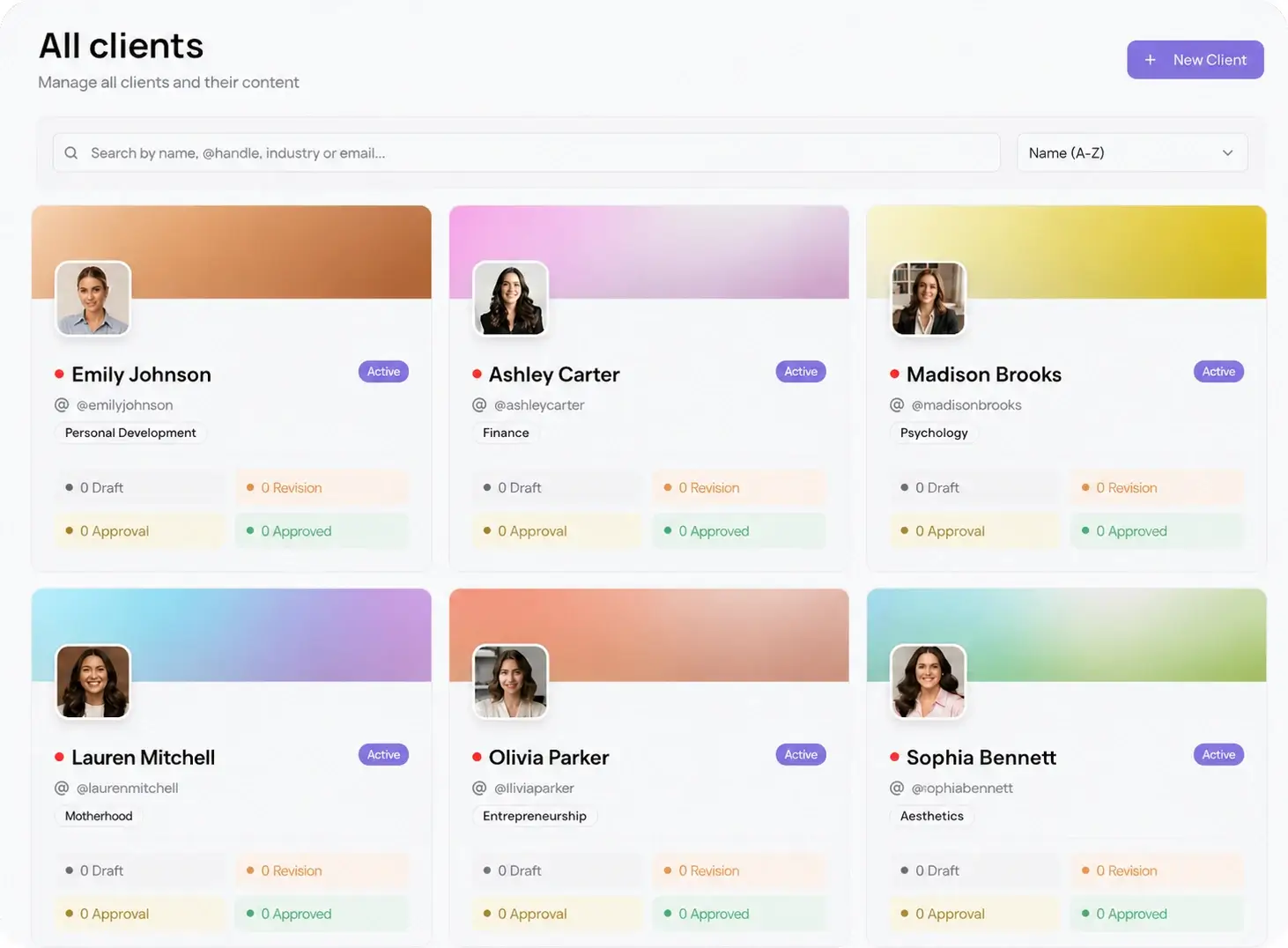
Proving ROI breaks when it depends on one person remembering to export numbers and hunt for UTM data before a renewal call. It holds when it is built into the workflow: the same outcomes tracked every month, the same report template per goal type, and the data already sitting where you work. When you run every account from one place, the ROI story and the production story stop being two separate jobs.
Viraly Post runs all of it from one dashboard: a workspace per client in multi-client management, all 10 native integrations, analytics you turn into a monthly ROI report in minutes, and password-less approvals so the content ships without the chase. Post to 10 platforms in 15 seconds, track what each post returned, then show the client the number in dollars. If you also want the metric-selection side of the report dialed in, see our guide on which social media metrics to report to clients. Pricing is per workspace from $29 to $99 a month, so proving ROI scales with your roster, not your stress.