
Where Sprout Social stops fitting the agency
Sprout Social is a capable enterprise suite. That is exactly why it starts to chafe once you run client accounts on agency margins. The platform is built for in-house brand teams with a budget and a headcount, the plans are licensed per seat, and the feature depth in listening, advanced analytics, and social CRM is far past what a lean agency uses on a Tuesday.
None of that is a flaw for a large brand. It is a mismatch for an agency. Your work is getting posts drafted, approved, and published across every client without the wrong asset landing on the wrong brand, and doing it on a cost base that does not spike every time you hire. When agencies go looking for a Sprout Social alternative for agencies, they are usually chasing three specific things an enterprise suite was never priced or shaped to do.
What is a Sprout Social alternative for agencies?
A Sprout Social alternative for agencies is a social media scheduler built around client accounts and flat cost rather than an enterprise license sold by the seat. Instead of paying per user for a heavy suite, you pay per workspace and load as many clients as a plan allows. Instead of routing client sign-off through an extra paid seat or an email chain, it hands the client a review link. The job overlaps with Sprout, publish and measure, but the unit of work is the client, not the seat.
Viraly Post is that kind of tool: an AI social media workflow platform for agencies and social media managers that runs multi-client scheduling, client approvals, and publishing to 10 platforms from one social media scheduler, with reporting built in rather than the whole product.
Per-seat pricing is the first thing agencies outgrow
Ask an agency owner what makes an enterprise tool hard to justify. It is rarely the features. It is the seat math. When a platform charges per user, every hire, every freelancer you loop in for a launch, and every account manager who needs to log in adds to the monthly bill. The cost tracks your team size instead of your revenue, so the tool gets more expensive right when you are scaling and margins are tight.
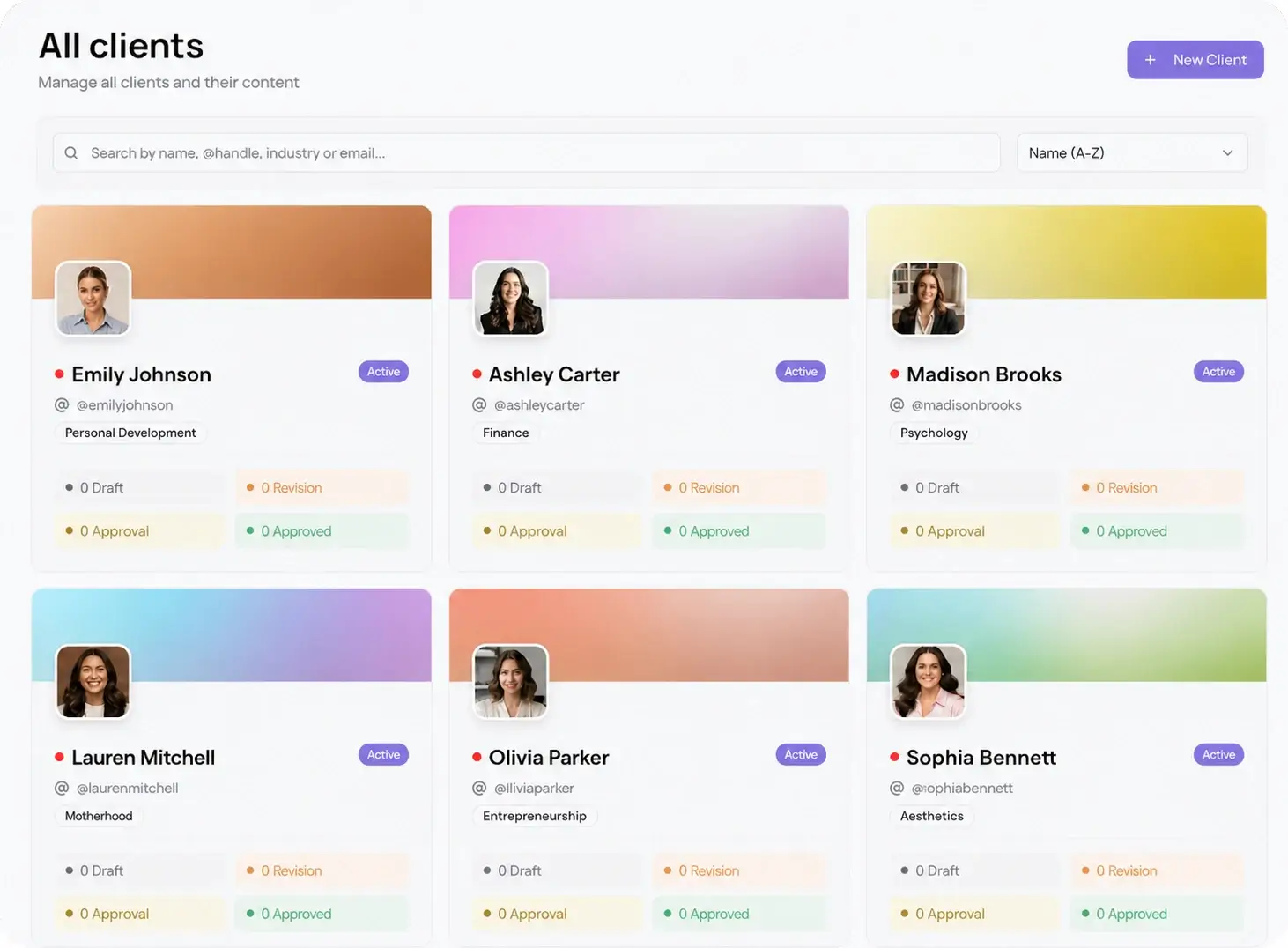
A per-workspace model breaks that link. You pay for the plan, add your team without a per-seat charge, and the cost follows how many client workspaces you run. Viraly Post prices this way: flat plans at $29, $49, and $99 per month, all 10 platforms included on every plan, no premium tier gating the networks your clients actually use.
Three things agencies need beyond an enterprise suite
Skip the feature-by-feature grid. For agency work, three differences decide it.
Per-workspace pricing, not per seat. A license metered by user climbs with your headcount, so the tool costs more the moment you grow. A tool priced by workspace lets you add team members and clients without the bill chasing each person. Viraly Post runs on flat $29, $49, and $99 plans.
Isolated client workspaces. Moving fast across many brands, a shared view makes it easy to post the wrong asset to the wrong account. Per-client multi-client management keeps each client's calendar, media, and approvals separate, and it lets you hand one client to a team member without exposing the rest of the roster.
Client approval without a login. This is the gap most agencies feel first. When sign-off runs through a paid seat or a screenshot pasted into chat, the client either learns a heavy tool or approves in a side channel where edits get lost. Agencies want the client to approve the actual post, in one place, with no account.
How password-less client approval should work
Approval is the gate between a drafted post and a live one, and it is where most agency workflows stall. The fix is to make the client's part frictionless. Send one link, let them approve, then let approved posts schedule themselves.
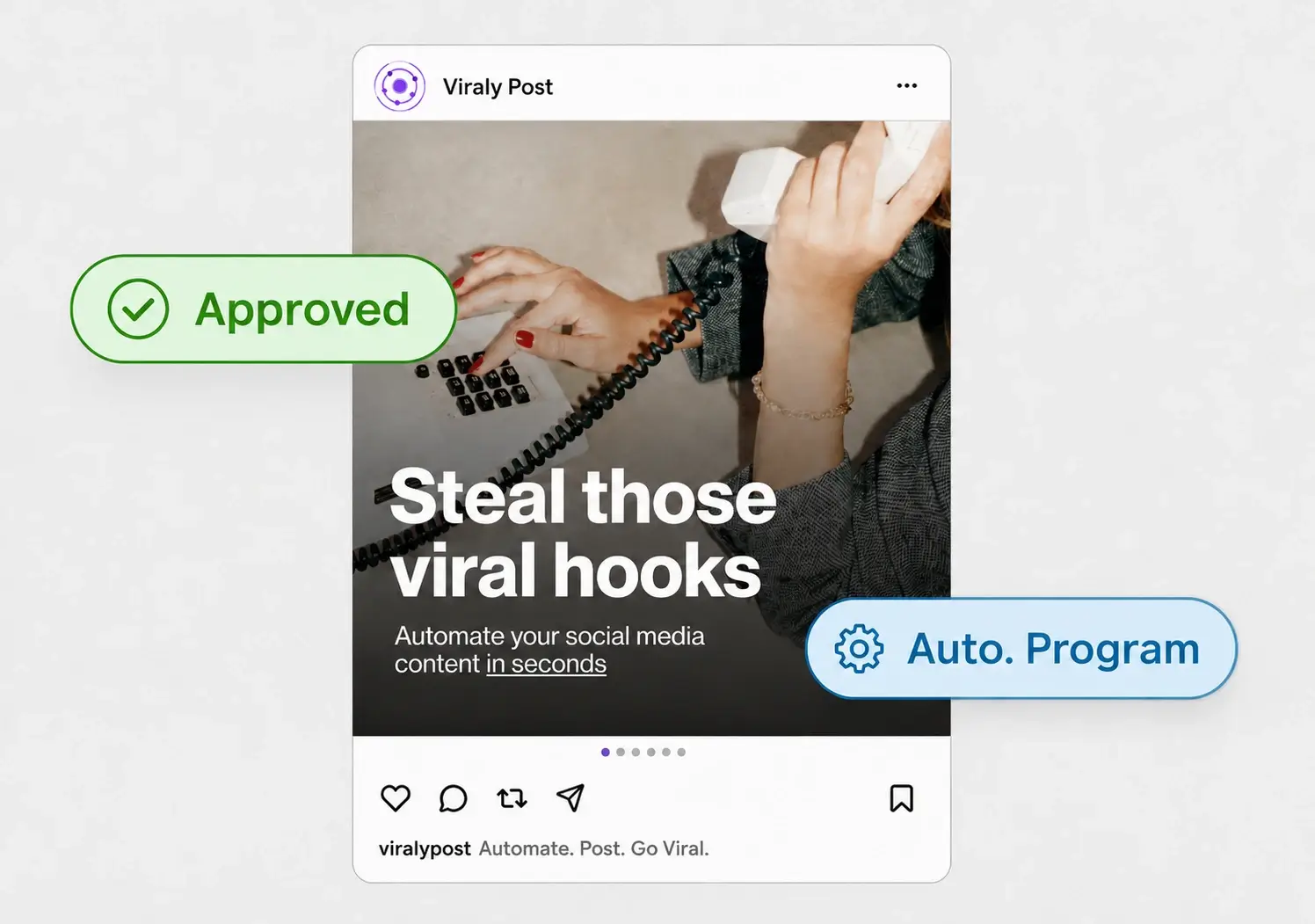
In Viraly Post the approval workflow is password-less. The client opens a single link, reviews the queued posts for their brand, and approves or comments with no account and no login. Approved posts move straight to scheduled in that client's workspace. Anything they flag stays a draft until you fix it. The approval and the schedule live in the same place, so nothing gets lost between a chat app, an email chain, and your scheduler.
How to move off Sprout Social without going dark
Switching tools sounds heavier than it is. Run it client by client and you never leave anyone unpublished.
- List every profile connected in Sprout Social and group its accounts by client. That grouping becomes your workspace map.
- Create one workspace per client in the new tool and connect that brand's accounts through the native platform integrations.
- Export the reports you still owe clients for the current period from Sprout before you cancel, so no monthly recap has a hole in it.
- Rebuild the next two weeks of scheduled posts first, so nothing already promised to a client falls through the gap.
- Send each client the password-less approval link once, so they learn the new review step on real posts.
- Run both tools in parallel for one billing cycle, then cancel Sprout once a full week has published cleanly from the new workspace.
Platform coverage: 10 networks on every plan
Coverage matters more for agencies because your clients do not all live on the same networks. Viraly Post posts to 10 platforms from one composer: Instagram, TikTok, LinkedIn, YouTube, Facebook, X, Threads, Pinterest, Bluesky, and Reddit. That includes the newer networks agencies get asked about now, like Bluesky and Reddit, and every platform is included on every plan rather than gated behind a higher tier. You write once, adapt where needed, and publish to 10 platforms in 15 seconds. Compare that against a per-seat suite and the math usually settles the question before the feature list does.