
The report is where your brand shows up or disappears
Think about the one artifact a client actually opens each month. It is not the calendar and it is not the posts. It is the report. That document is where they decide whether the retainer was worth it, and it is the single most-read thing your agency produces. So when a vendor's logo sits at the top of it, or the numbers arrive as a raw export from a tool the client can name, you have handed away the credit for your own work.
Most agencies do not lose this on purpose. They lose it because reporting is the last job of the month, done under time pressure, stitched together from five platform dashboards and a spreadsheet. The brand slips because the process is a scramble. Fix the process and the branding follows, because a report built from one source, on a template you reuse, is easy to put your name on and send on time.
What white label client reporting actually means
White label client reporting is a monthly performance report delivered under your agency brand rather than the vendor's. The client sees your logo, your colors, and your framing. They do not see the name of the analytics tool or scheduler that produced the numbers. It is the same report any agency sends, reach, engagement, growth, and the results that map to the client's goal, presented as yours end to end.
The point is not to hide your stack. It is to keep the client's attention on the relationship that matters, the one with you. When your brand carries the report, the strategy reads as your strategy and the results read as your results. When a vendor's name carries it, you have quietly introduced the client to the tool they could, in theory, buy themselves.
Why scattered platform metrics break agency reporting
The reason branded reporting falls apart is rarely the branding. It is the data. A client on Instagram, TikTok, LinkedIn, and a couple of others means four or five separate dashboards, each with its own export format, its own definition of a view, and its own login. Pull from all of them by hand and the report takes half a day, lands late, and looks different every month because you built it differently every month.
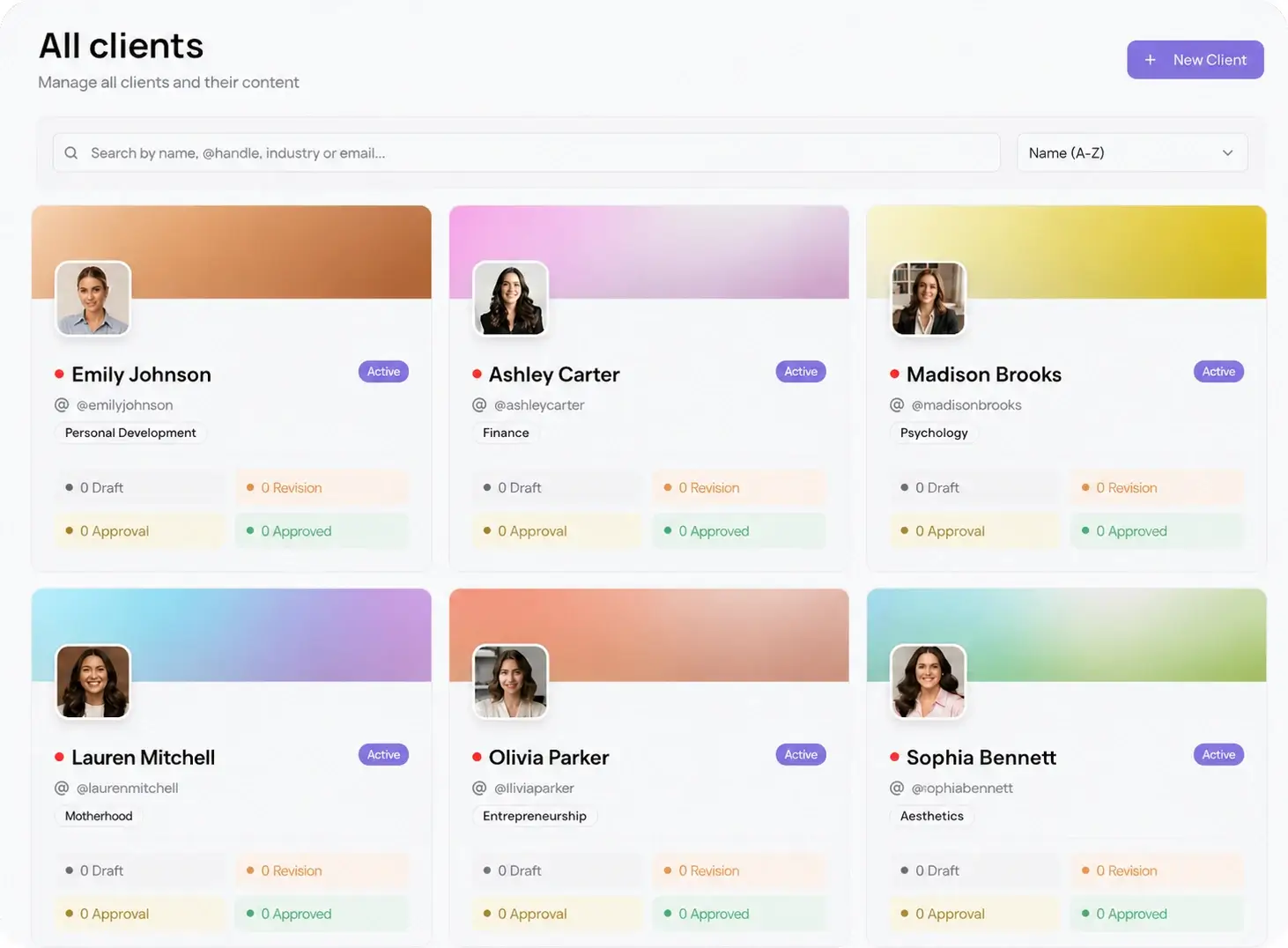
That fragmentation is also where the vendor's brand creeps back in. A screenshot pasted from one platform carries that platform's chrome. An export from a point tool carries the tool's header. The cleaner answer is to run every client account in one place, so the numbers from all 10 platforms sit in one per-client view and you report from a single source. Viraly Post holds each client in its own workspace and pulls every connected platform into one analytics view, so the monthly report starts from one screen instead of ten tabs.
How to build white label client reporting in 7 steps
Treat reporting as a repeatable system, not a monthly improvisation. Run every account through the same loop and the report stops being the task you dread and starts being the reason the client renews.
- Create one workspace per client so each account's data stays isolated and nothing bleeds across reports.
- Connect every client platform across the 10 native integrations so all the numbers land in one view.
- Add your agency logo and colors to the client-facing surfaces, the approval links and the shareable calendar, so the whole workflow reads as yours.
- Pick the three or four metrics that map to each client's goal, whether that is leads, sales, reach, or community growth.
- Build one report template per goal type so a performance client and an awareness client each get the right numbers in the same clean layout.
- Each month, pull the period's data, drop it into the template, and add one plain sentence to each number explaining what it means and what you will do next.
- Send the branded report on the same fixed date every month, even a quiet one, so your value stays visible between invoices.
Seven steps, and only two of them happen monthly. The setup work, the workspaces, the connections, the branding, and the templates, is done once. After that, reporting is fill and send.
What to put on a branded client report, and what to cut
A white label report earns its keep by being read, which means it has to be short and pointed. Lead with the result the client cares about: the leads, the sales, the saved ad spend, or the reach that maps to their goal. Follow it with the two or three supporting metrics that explain the result. Then stop. A report with forty numbers gets skimmed and forgotten, and it makes the agency look like it is padding.
Cut vanity counts that do not tie to a goal, and cut raw platform screenshots that carry another brand's chrome. Keep a short written read on each number, because the sentence next to the metric is what the client remembers in the renewal conversation. If you want the full method for choosing those metrics, see our guide on which social media metrics to report to clients. The reporting layer sits on top of the same branded setup covered in our white label social media scheduler guide.

Where white label reporting stops being cosmetic
Putting your logo on a late, inconsistent report does not help you. It attaches your brand to the friction. White labeling amplifies whatever the underlying process already is, so the process has to be worth your name. A report that arrives on the first of every month, reads the same way each time, and ties every number to a goal makes your agency look organized and in control, and that impression sticks to your brand.
That is why reporting and production should not be two separate jobs done in two separate tools. When the posts, the approvals, and the numbers all live in one place, the report writes itself from the work you already did. You spend the saved time on the one thing the client is really paying for, the thinking, and you send a document that looks like it came from an agency that has its act together.