
Why the tool's logo on a client's screen costs you
A client asks who Buffer is, because that name just showed up on the approval email you sent. Now you are explaining your tech stack instead of your strategy. Every time a vendor's brand appears in front of the people paying you, it chips at the story that your agency delivers the whole service.
That is the case for a white label setup. You are not hiding anything shady. You are keeping the client's attention on the one relationship that matters, the one with you. The scheduler does the publishing, the approvals, and the calendar. The client just sees your agency doing excellent work on time.
What a white label social media scheduler for agencies actually does
A white label social media scheduler for agencies is a publishing and approval tool that puts your branding on every surface a client touches, and keeps the vendor's name out of sight. It is not a separate product. It is a mode: the same scheduler you use internally, presented to clients as yours.
Three surfaces decide whether a setup reads as white label or not:
Approval links. When a client reviews posts, the page they open should carry your logo and colors, not a login screen for a tool they have never heard of. Viraly Post sends a password-less approval link branded to the agency, and clients never see Viraly Post branding when they approve.
Shareable calendars. The month view you send a client to preview the plan is a branding surface too. A branded shareable calendar per client keeps the presentation on-brand from planning through publishing.
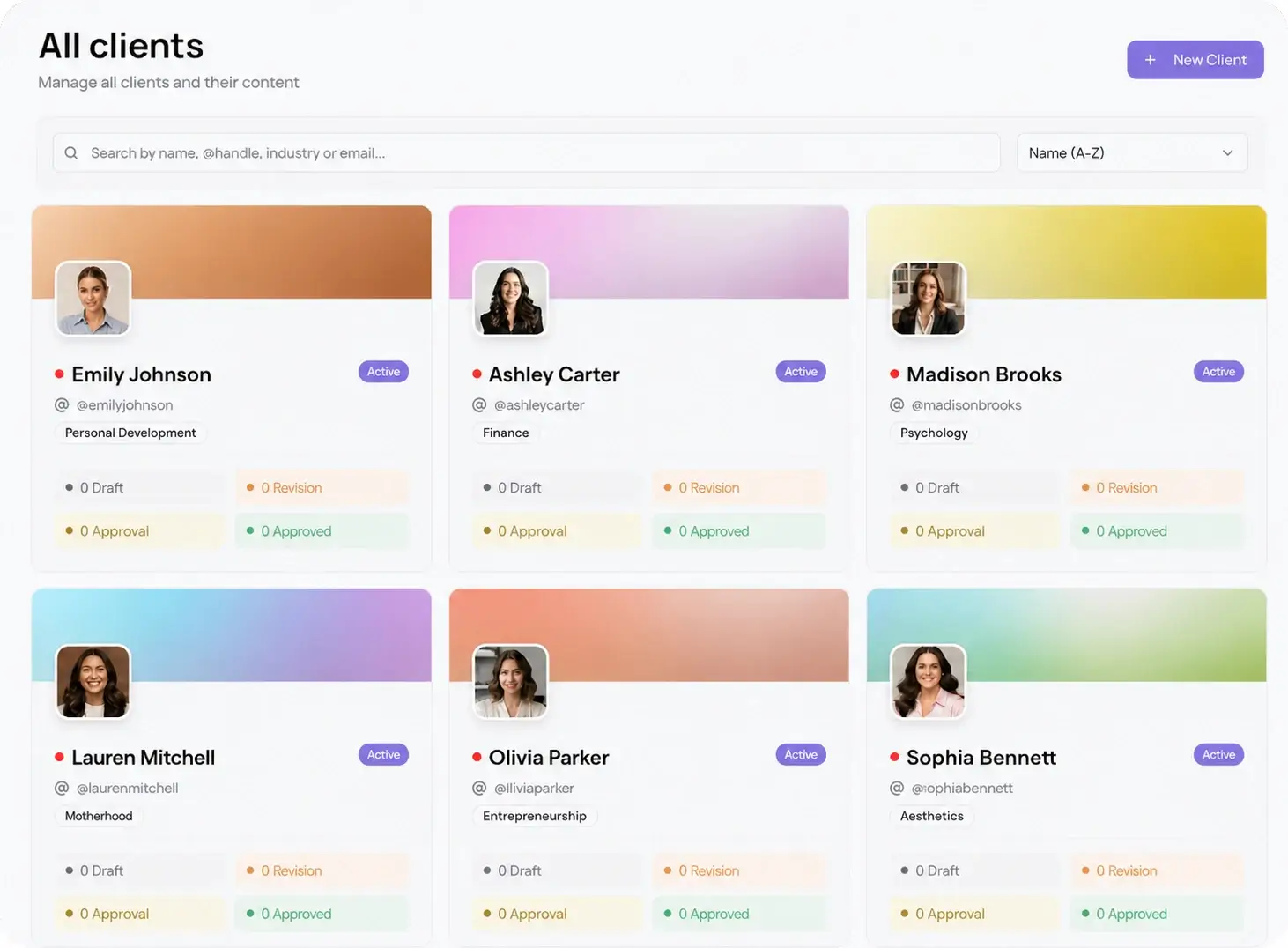
Client workspaces. Behind the scenes, each client needs its own isolated space so nothing bleeds across accounts. Per-client workspaces keep assets, approvals, and connected accounts separate, which is what makes the branded front end trustworthy.
Why per-client pricing quietly kills a white label margin
Here is the trap most agencies miss until the invoice arrives. You resell social under your own brand at a healthy retainer, but the scheduler underneath charges per social channel or per client. Every new account you win raises your cost of goods, so growth eats into the exact margin white labeling is supposed to protect.
Flat, per-workspace pricing fixes that. When the tool cost does not move as you add clients, the branded service you resell keeps its full margin. Viraly Post prices per workspace with all 10 platforms included on every plan, so a tenth client costs you the same tooling as a second one.
How to set up a white label scheduler for your agency
You can have a branded, client-facing workflow running in an afternoon. The order matters, because you want the client-facing surfaces branded before a single client sees them.
- Create one workspace per client so accounts, assets, and approvals stay isolated.
- Connect each client's accounts across the 10 native integrations, from Instagram and TikTok to LinkedIn and Bluesky.
- Add your agency branding to the client-facing surfaces: the approval links and the shareable calendar.
- Build the month in one workspace, then send the branded calendar for a preview before anything is scheduled.
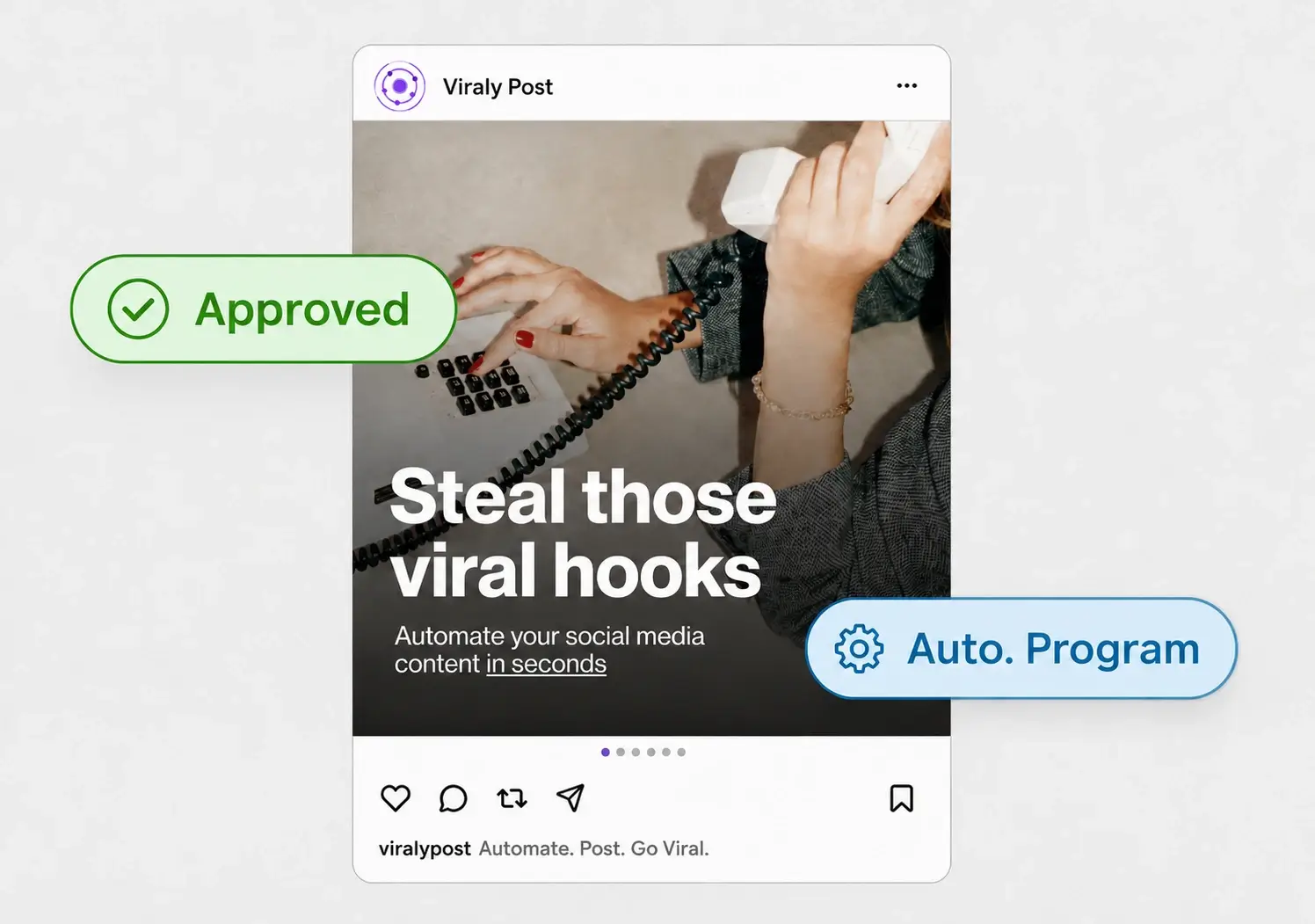
- Send the password-less approval link. The client approves each post in place, no account and no login.
- Let approved posts auto-schedule, and post to 10 platforms in 15 seconds from one composer.
Notice what the client never does in that sequence: create an account, learn a new tool, or read a vendor's name. They open a branded link, react to the work, and move on. That is the whole point.
Where white labeling stops being cosmetic
Branding a login page is easy. The harder question is whether the workflow underneath is good enough that your brand on it means something. A slow approval loop with your logo on it is still a slow approval loop, and the client feels the delay no matter whose colors are on the screen.
This is why the approval step carries so much weight. When a client can review and approve from their phone in seconds, your agency looks fast and organized, and that impression attaches to your brand. When they have to chase a login, dig through email threads, and send screenshots back, that friction attaches to your brand too. White labeling amplifies whatever the underlying workflow already is, so the workflow has to be worth putting your name on.