
Internal approvals stall for different reasons than client ones
The social media approval process for in-house brand teams has a different failure mode than agency work. You are not chasing an outside client. You are waiting on your own brand lead, a product manager, and sometimes legal, and every one of them has a full-time job that is not reviewing your posts. So the draft sits. The launch window drifts. You end up pinging the same three people in three different channels.
The fix is not another nudge. It is a defined process where every post has one place to be reviewed, a clear order of who signs off, and a status you can read at a glance. This guide covers what that process looks like for an in-house team and how to run it across every channel the brand posts on.
What is a social media approval process for in-house brand teams?
A social media approval process for in-house brand teams is the sequence that takes a post from draft to internal sign-off to scheduled. At minimum it has six stages: draft the content, batch it into a review set, route it to the right reviewers, collect feedback per post, lock the approval, and schedule the approved version. Each stage has to be trackable, so you always know which posts are cleared, which are waiting on a stakeholder, and which need a revision.
The weak version is a slide deck emailed to five people plus a running Slack thread. It works for one campaign and falls apart across a full content calendar. The strong version keeps every post, every comment, and every approval in one view, tied to the channel it belongs to. That is the line between a process and a standing favor you keep asking for.
Why internal sign-off is slower than it should be
Email and shared decks do not track state. When your VP replies "fine except the Tuesday one," you now have to match that comment to a specific post, edit it, and remember to loop legal back in. Multiply that across a month of content and several channels, and the tracking itself becomes a second job. Posts slip, the wrong version goes live, and you lose the record of who actually approved what.
The other drag is the review format. Stakeholders are asked to approve raw copy in a document, so they cannot picture the final post and they hedge. Then they hedge again when they see the real thing. Reviewers who see the finished post in context, the way it will appear on Instagram or LinkedIn, say yes once. A review that looks like the live post is a review that ends.
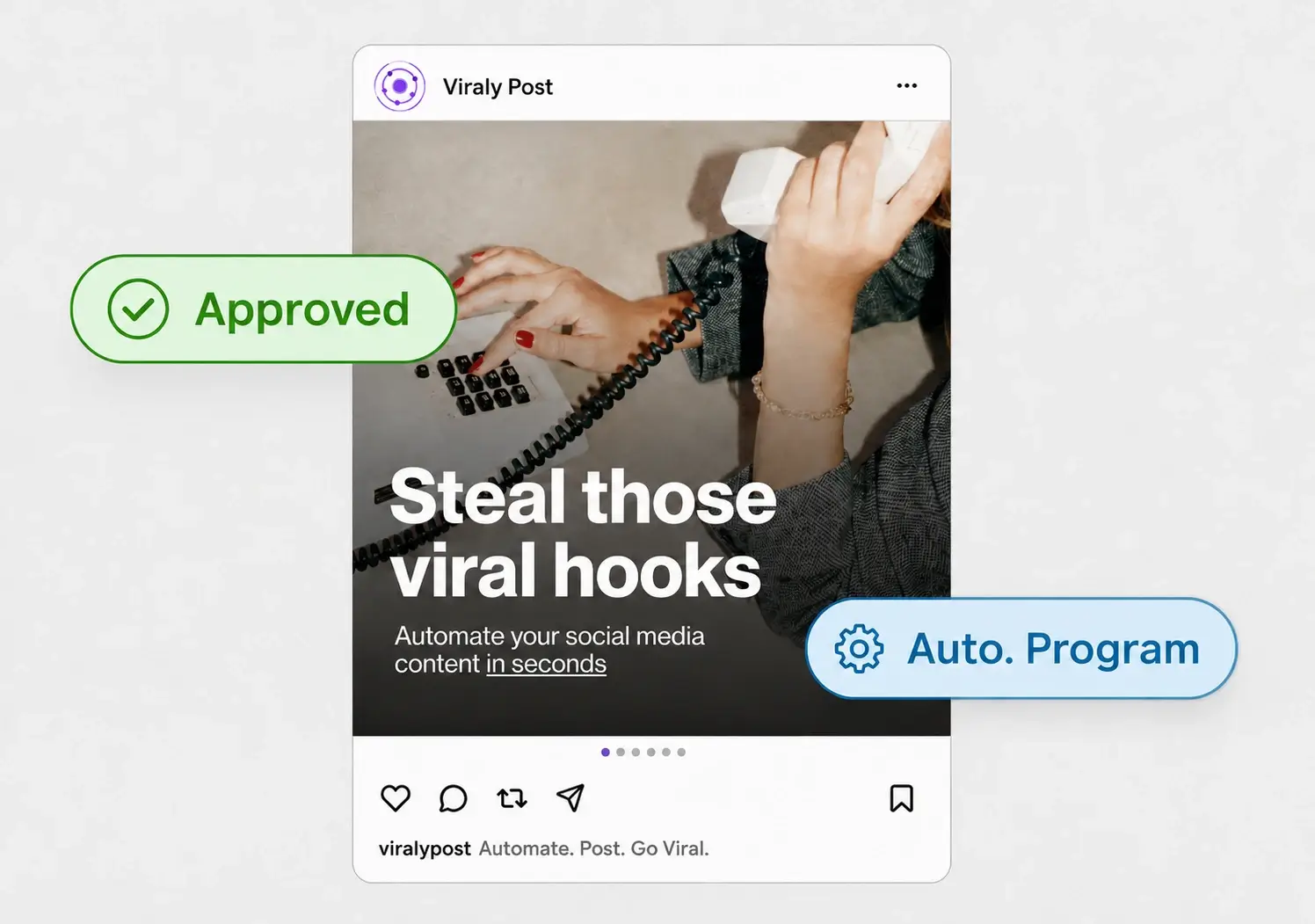
The social media approval process for in-house brand teams in 6 steps
Here is a process that holds up across a full calendar and more than one reviewer. It assumes you plan each brand channel in its own workspace so nothing crosses wires.
- Draft in one workspace. Build posts inside a single space per brand or channel, using per-workspace management so copy, media, and schedule live together and stay organized by channel.
- Batch a review set. Do not send posts one at a time. Group a week or a month of content into a single review so each stakeholder makes one pass instead of ten. Lay the batch out on your content calendar first.
- Route one password-less link. Send brand, legal, and leadership the same link, no account and no password. Each reviewer sees every queued post in context, which is the step that ends the reply-all thread.
- Collect feedback per post. Reviewers approve or request a change on each post individually, so feedback attaches to the exact item it refers to. No more decoding "the Tuesday one."
- Lock the approval. Once every required reviewer has signed off, the post is cleared and held from edits, so what gets scheduled is exactly what was approved. Run this through the approval workflow so the sign-off is on the record.
- Auto-schedule the approved posts. Approved content moves straight into the queue at its planned time with no re-upload. You post to 10 platforms in 15 seconds once the green light is in.
How to route one post to legal, brand, and leadership at once
Most delay comes from running reviewers in series: you send to brand, wait, then send to legal, wait, then send up for a final yes. Run them in parallel instead. One link goes to everyone who needs to weigh in, each person reviews on their own time, and you watch the approvals land per post rather than per inbox. Legal flags the one caption with a claim to soften. Brand okays the visuals. Leadership signs the campaign hero post. Nobody blocks the others.
That single change, from a relay race to one shared link, is where an in-house team gets its launch calendar back. When the whole review lives on one link across every channel, the approval is light enough that people actually do it the day you ask. Connect each channel the brand posts on through the 10 native integrations and schedule the approved work in one pass.